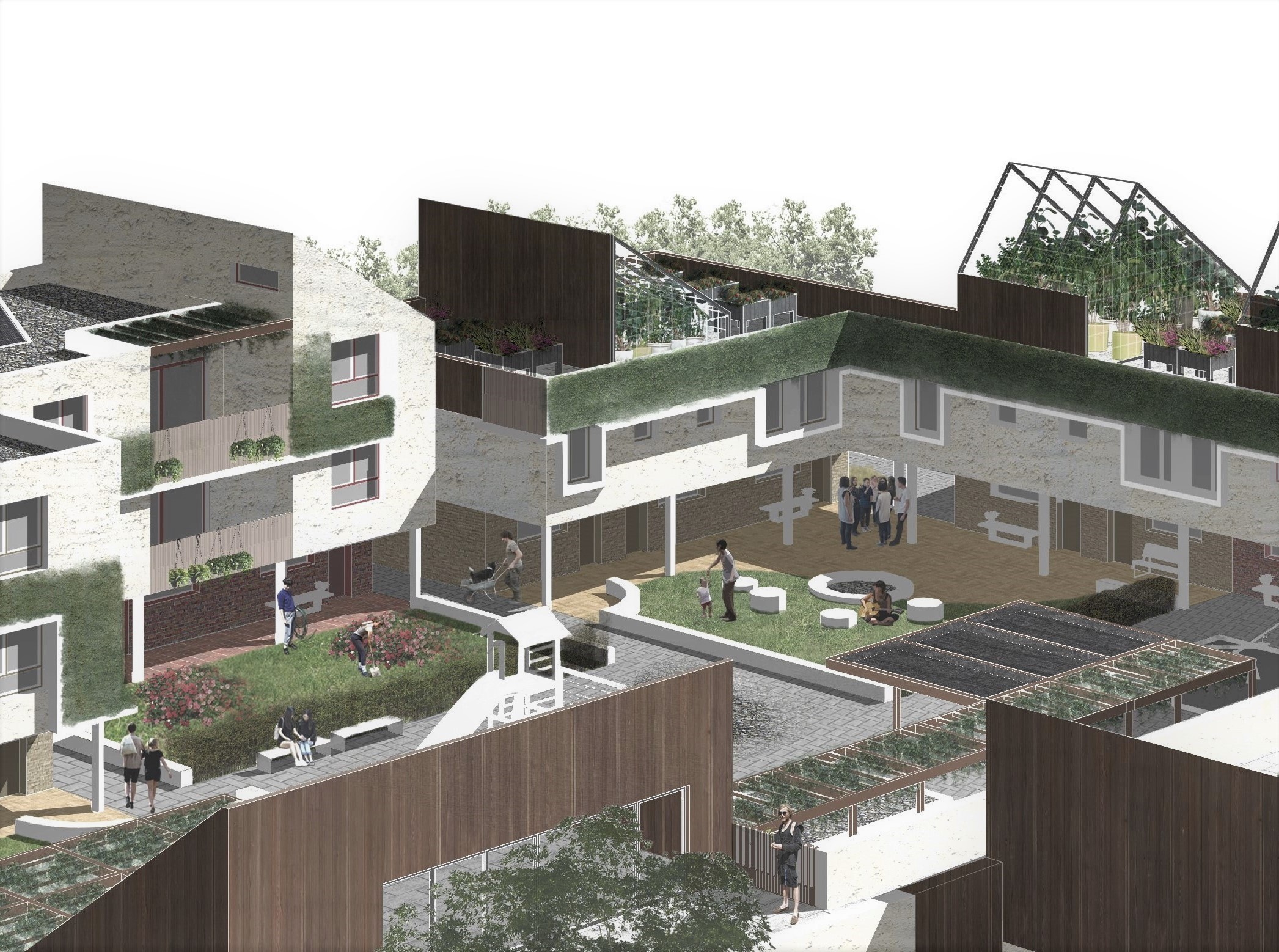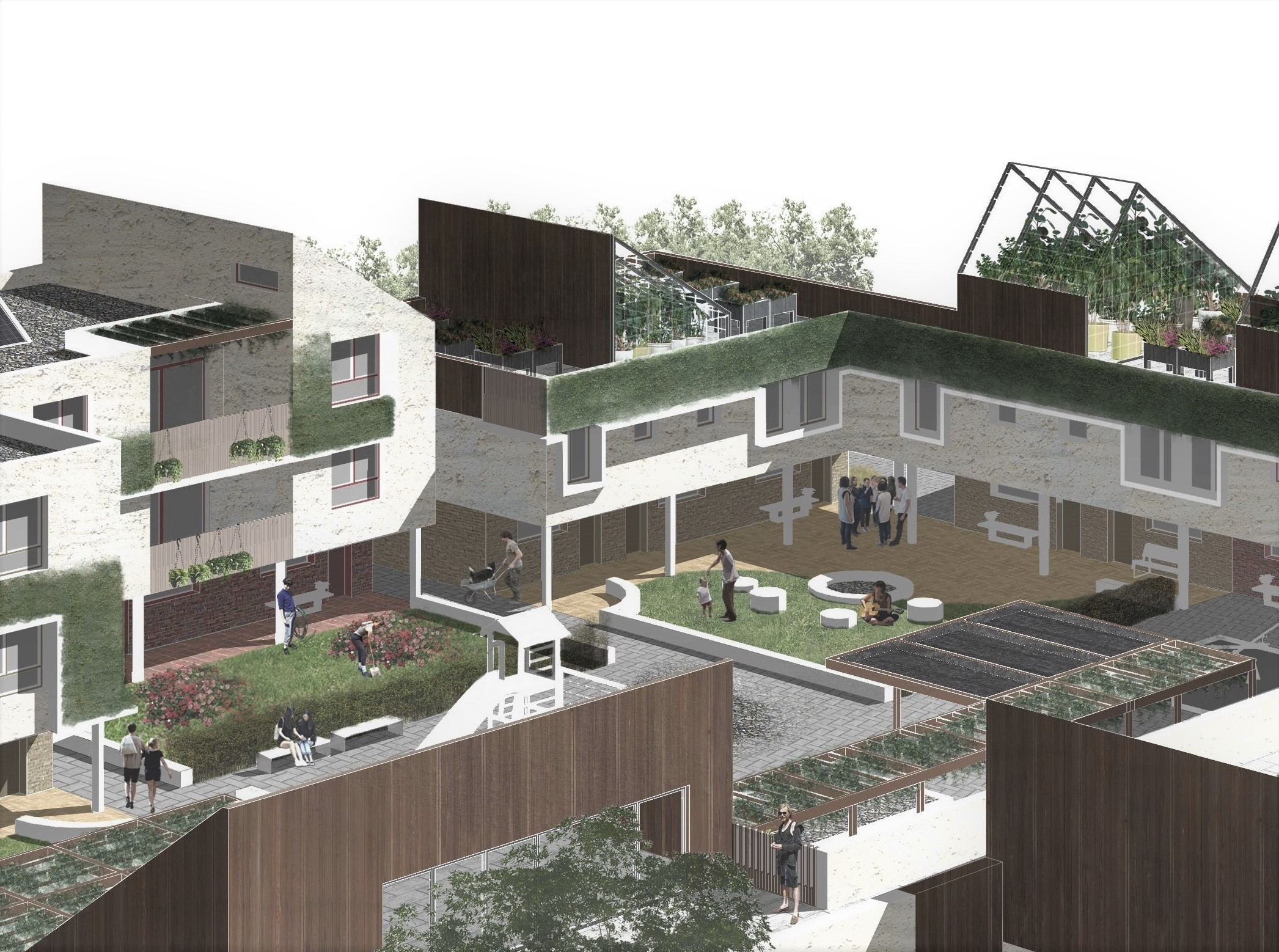
Societies are usually built up like spatial/social tree structures. But some links are missing here between the scale level of the neighborhood and the individual house. Streets can do the job, but are not fit for it, because the scale is too big and the social meaning is ignored. In the essay I want to show how the gap between the neighborhood and the individual house can be filled with spatial scale levels that have a social meaning. An approach in which different kinds of cohousing can emerge, an approach in which future inhabitants can have an emancipated role in the design process.
Tag: DesignPlay
-

Designing for cohousing
In cohousing most important is involvement. Not only between residents and the built environment. Both kinds of involvement come together in the design process.
Based on my experience that started in the seventies I developed a design process, ‘Field and Volume’ in which residents can take part and invent their project. (more…)
Authorphilip krabbendam -

DESIGN PLAY FIVE Part 2 by undergraduate students at SIT
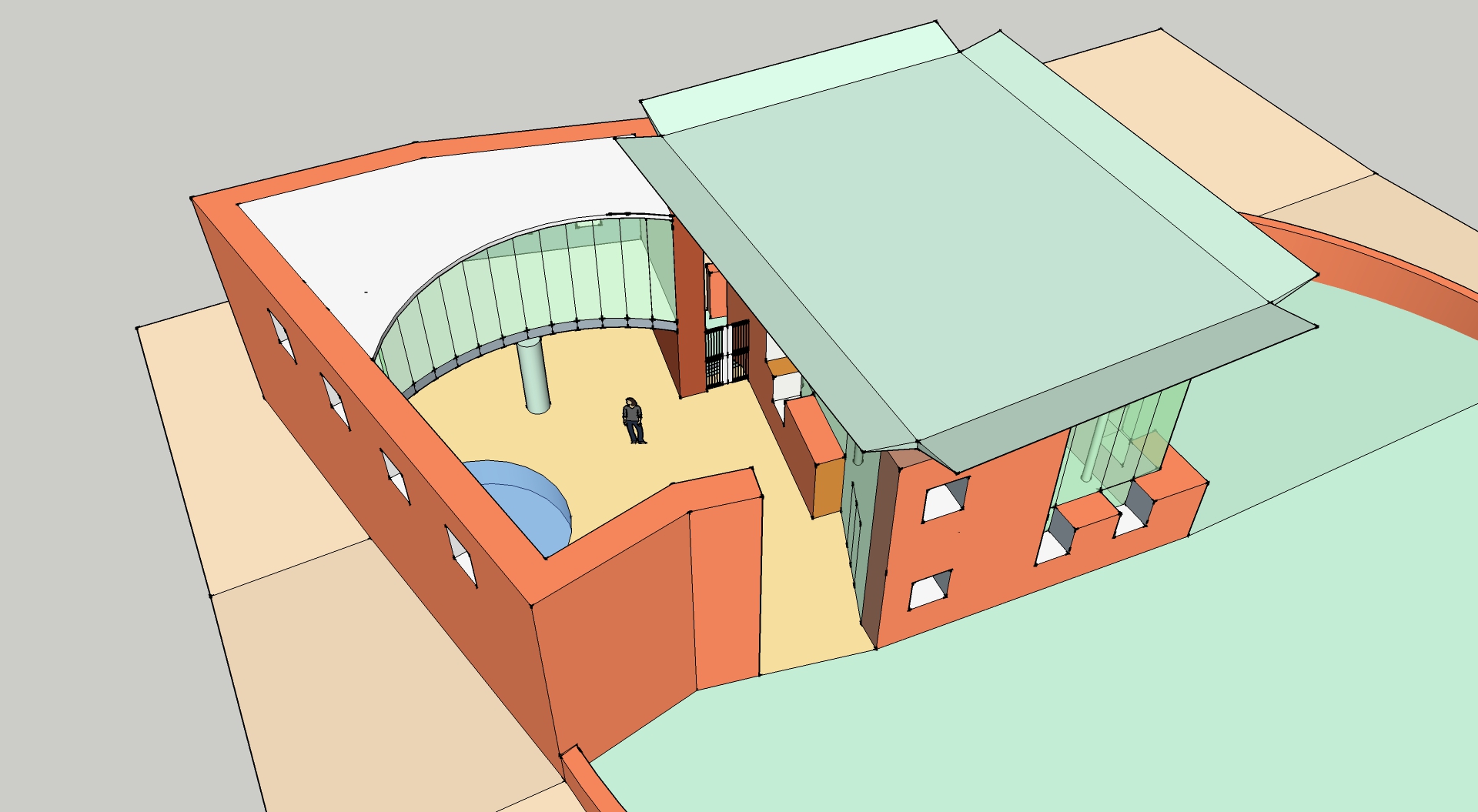
Almost 80 students who are at the third grade of the Architectural Department enjoyed the Design Play 1 and 5 at the Shibaura Institute of Technology in Tokyo. They first made hand writing in the class spending about 20 minutes followed by the explanation of the constructor, Professor Minami. The illustrations in the book of “Conversations with Forms” and some drawings by the instructor were shown as a guidance. After the class students spend a couple of weeks to explore their studies using the Sketch Up as their home works. Some students have no experience to use the Sketch Up before so it took some time to start the Plays. Professor Minami told the students there is no right nor wrong answer for the Design Plays and that students can just develop their design skills by enjoying the Plays. You can see the varieties of our students’ works. This is just the beginning of our students’ works.
-

DESIGN PLAY FIVE Part 1 by undergraduate students at SIT
Almost 80 students who are at the third grade of the Architectural Department enjoyed the Design Play 1 and 5 at the Shibaura Institute of Technology in Tokyo. They first made hand writing in the class spending about 20 minutes followed by the explanation of the constructor, Professor Minami. The illustrations in the book of “Conversations with Forms” and some drawings by the instructor were shown as a guidance. After the class students spend a couple of weeks to explore their studies using the Sketch Up as their home works. Some students have no experience to use the Sketch Up before so it took some time to start the Plays. Professor Minami told the students there is no right nor wrong answer for the Design Plays and that students can just develop their design skills by enjoying the Plays. You can see the varieties of our students’ works. This is just the beginning of our students’ works.
-

DESIGN PLAY ONE Part 2 by undergraduate students at SIT
Almost 80 students who are at the third grade of the Architectural Department enjoyed the Design Play 1 and 5 at the Shibaura Institute of Technology in Tokyo. They first made hand writing in the class spending about 20 minutes followed by the explanation of the constructor, Professor Minami. The illustrations in the book of “Conversations with Forms” and some drawings by the instructor were shown as a guidance. After the class students spend a couple of weeks to explore their studies using the Sketch Up as their home works. Some students have no experience to use the Sketch Up before so it took some time to start the Plays. Professor Minami told the students there is no right nor wrong answer for the Design Plays and that students can just develop their design skills by enjoying the Plays. You can see the varieties of our students’ works. This is just the beginning of our students’ works.
-

DESIGN PLAY ONE Part 1 by undergraduate students of SIT
Almost 80 students who are at the third grade of the Architectural Department enjoyed the Design Play 1 and 5 at the Shibaura Institute of Technology in Tokyo. They first made hand writing in the class spending about 20 minutes followed by the explanation of the constructor, Professor Minami. The illustrations in the book of “Conversations with Forms” and some drawings by the instructor were shown as a guidance. After the class students spend a couple of weeks to explore their studies using the Sketch Up as their home works. Some students have no experience to use the Sketch Up before so it took some time to start the Plays. Professor Minami told the students there is no right nor wrong answer for the Design Plays and that students can just develop their design skills by enjoying the Plays. You can see the varieties of our students’ works. This is just the beginning of our students’ works.
-

example of students’ work of Shibaura Institute of Technology, Tokyo
This is just the first example of the students’ works of my class. Now almost 100 undergraduate and graduate students of Shibaura Institute of Technology Tokyo are enjoying the Design Play.
-

An interactive stacking play
In the book “Conversations with Form” designPlay 7 is about the combination of different systems, stacked one upon the other into a coherent whole. For an introduction into the ramifications of this way of combining forms made from different systems and for varied examples of such combinations, see the book as mentioned.
In most cases the stacking is controlled by a single designer but this kind of systemic combination lends itself for an exciting and challenging designPlay as well. The attached pdf file introduces this particular interactive play.
AuthorJohn HabrakenWebsite -

inhabiting what is there
This post introduces an example Play where the base form is the ruin of an old Portuguese farmhouse and the player is asked not to alter the ruin other than add to it with contemporary materials and components to make a coherent whole. As usuals with DesignPlays no ‘program’ is given but the capacity for possible use should emerge from the form itself. The particular play example shown here touches on the issue of the combination of two or more architectural systems, each under control of a different designer. The challenge is to arrive at a coherent whole, where the handling of each of the systems is doing justice to its characteristic properties. In this case we have an interaction between designers who are separated in time and whereas the last designer must respect and enhance what is left of the earlier design.
A SketchUp model of the ruin is available under the category ‘baseforms’.
AuthorJohn HabrakenWebsite -

Design Play–Hong Kong Studio
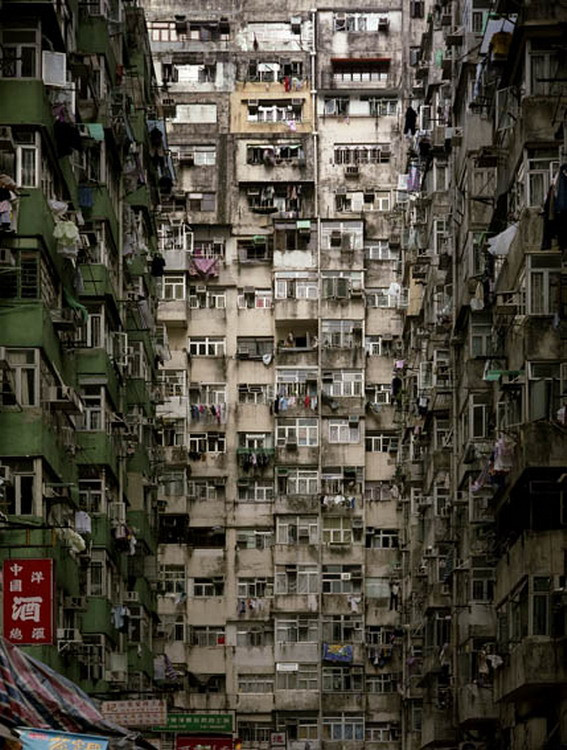
In this Hong Kong studio in 2012, we are asked to observe changes on Architecture elements in the city of Hong Kong and Harbin. While finish two of seventh thematic design plays in Professor Habraken’s new book “Conversations with Form, a workbook for students of architecture”
AuthorJia Lu