Tag: development

  • A moment in the life of a building

    A moment in the life of a building

    A moment in the life of a building

    Today, Cable Factory is one of the major cultural centres of Helsinki. Focusing on the years 1989-91 when the industrial monument was in peril, architect Pia Ilonen reflects on the dialectic of use and vacancy, emptiness and appropriation, exploring the transformational cultural potential of free, underdefined space.

  • Open Building BlackJack an energy neutral cooperative development

    Open Building BlackJack an energy neutral cooperative development

    How would you like to live?. What does your dreamhouse look like?
    Would it be possible to make your own apartment?

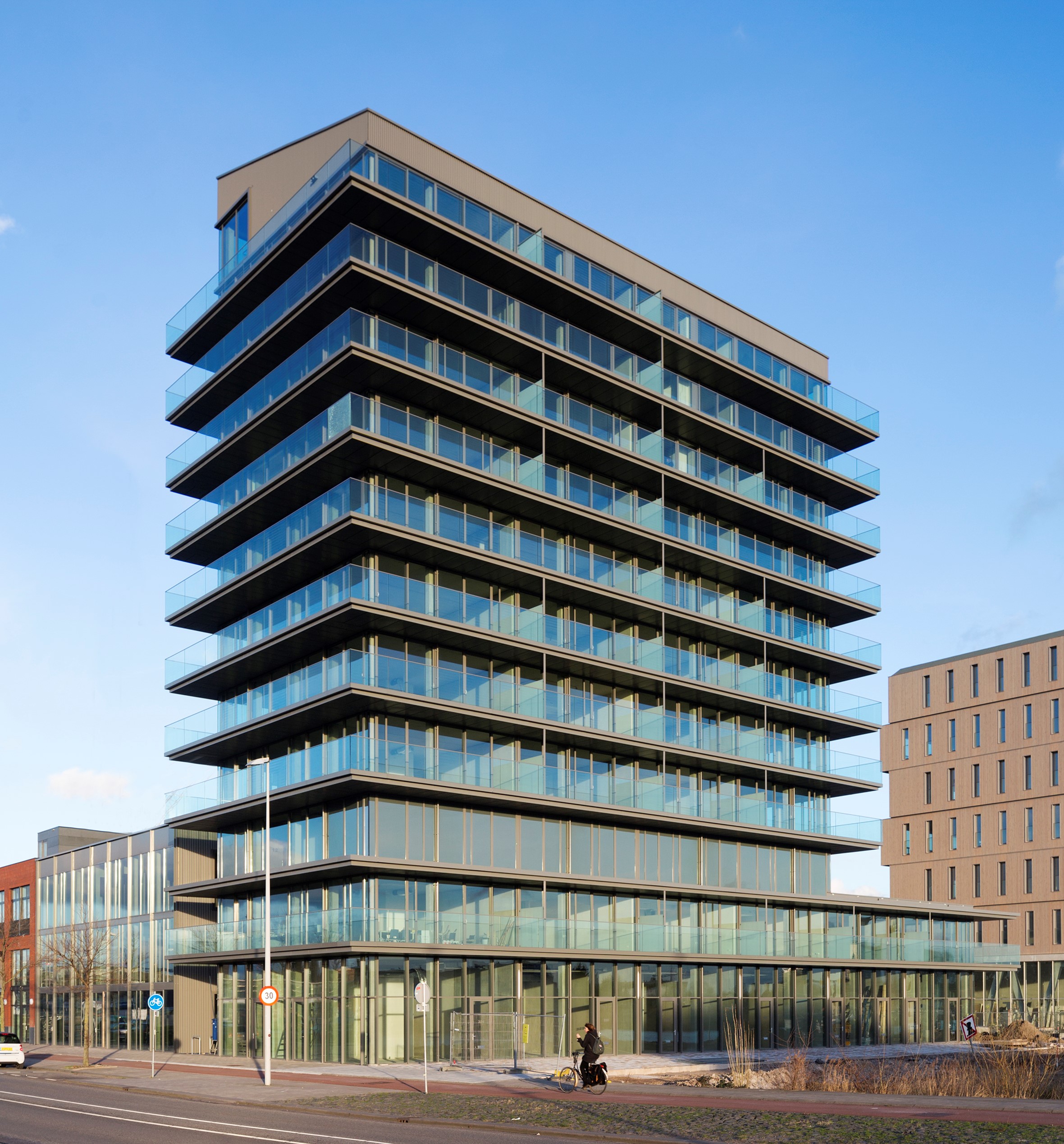
    BlackJack is an energy efficient eleven story high building with maximum glass, maximum light, maximum view, maximum size of balconies, extra inside height, maximum freedom in choosing the size, facade and layout of your own dwelling. A bright, sober and sturdy building designed with attention and care in the details. BlackJack is an exercise making an cost- and energy- efficient apartment building with maximum freedom, public participation and flexibility for house-owners, now and in the future.

    To achieve this the carcass is made of prefab concrete columns and fontanel walls which makes it possible to combine or separate units very easy. The façade has a predetermined building system but the layout is determined by each buyer. Each floor has an over dimensioned amount of facilities like a fuse box, doorbell, underfloor heating unit, front door etc. In the upper layer of every floor there is an intelligent pipeline system installed making all imaginable layouts possible. These measures gives people the opportunity to choose their own size and layout of their dwelling. This makes it also possible to have an office at home with own entrance, merge, divide and change the use in the future.

    The building consists of 80% residentials and 20% commercial units. All buyers, both private or business became member of the cooperative association. The cooperative is also the client.

    With each owner individually we developed a tailor made design and floorplan. Hereby all houses are unique. The often free floorplans deviate from what is known as a standard in housing floorplan. This is not invented in advance but arose from the wishes of the clients and the unique opportunities that were possible. (more…)

  • Open Building Patch22, a highrise in wood

    Open Building Patch22, a highrise in wood

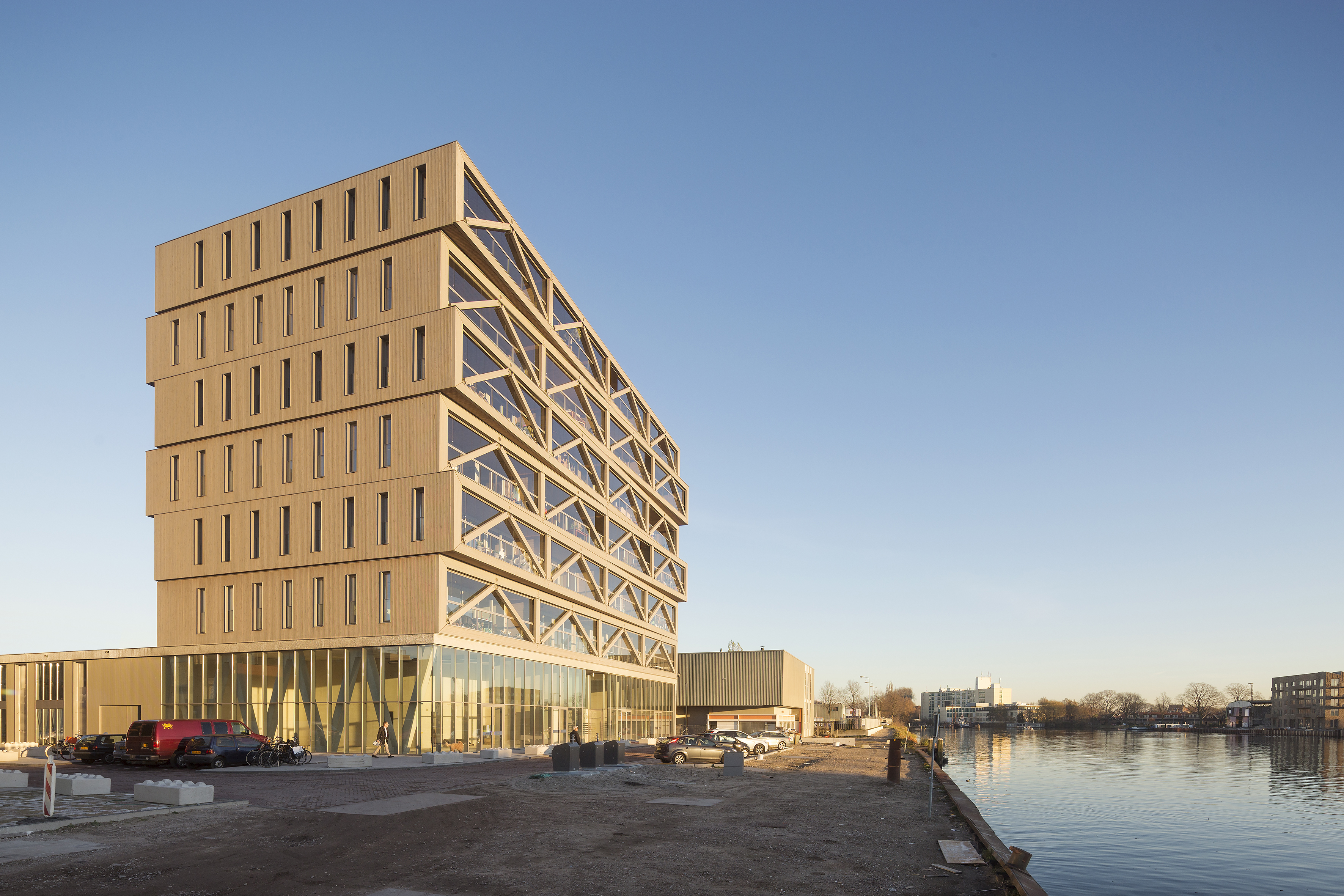
    PATCH22, a 30m tall high-rise in wood, was one of the successful plans in the Buiksloterham Sustainability Tender in 2009. The initiators, the architect Tom Frantzen and building-manager Claus Oussoren,founded Lemniskade Projects to achieve independently what they had never been able to manage when working on commissions for their previous clients:  an outsized wooden building with a great degree of flexibility, striking architecture and a high level of sustainability, not because that was what was required but because that is what ought to be done.

    The project was developed for their own account and risk in the middle of the crisis years of 2009-2014, and innovative financing solutions were conceived and implemented to meet this challenge. The project also incorporates numerous innovations in the technology used and application of technical rules, all aimed at achieving the desired flexibility without having to make compromises. Examples include the hollow floors and removable top floor, the lack of shafts in the apartments — achieved by having the piping and cabling taken horizontally to central shafts in the core — and agreements for a fixed ground lease with flexible positioning of the functions within the building. But the most unusual feature is the use of a wood as the main structure for the 30m-tall building. Moreover, the wood has largely been left visible, making this a key factor in the ambience of the apartments and the exterior.

  • FLEX 4.0, a practical instrument to assess the adaptive capacity of buildings

    Adaptive buildings are green buildings. But the question is: how to measure green? A direct connection can be made between adaptive building and sustainability. Market developments show increased demands for flexibility and sustainability by users and owners as well as a growing understanding of the importance of a circular economy. Since 2014 a research project at the Delft University has been investigating the adaptive capacity of buildings. As one of the results several versions of an instrument to assess the adaptive capacity of buildings have been developed since. The last version FLEX 4.0, amongst others based on the support and infill theory of Habraken [1], is described in detail in this paper, including all flexibility key performance indicators, the different default weighting factors, their assessment values and some examples to determine the flexibility class of buildings. This paper thus presents a complete assessment instrument that can be used in practice.

    © 2016 The Authors. Published by Elsevier Ltd.
    Peer-review under responsibility of the organizing committee of the SBE16 Tallinn and Helsinki Conference.