This paper presents results of an architectural research regarding public Brazilian social housing production. Its goal was to evaluate the design, technological-constructive, economic and management feasibility of producing, as well as the financial feasibility for dwellers to access a more adequate dwelling, in light of the Open Building approach. The investigation arises from two issues: [1] spatial rigidity of units and buildings and [2] the absence of dwellers in the decision- making process once currently this producton is the result of the exclusive partnership between State and Market. Besides the inadequacy when meeting families’ housing needs, the current rate of housing production is low compared to the predominant housing provision performed by the Autoconstruction. This paper demonstrates that Habraken’s Supports Theory is, as a counterpoint, an effective way of reconciling the contradictions mentioned and replacing the obsolete paradigm with a new interweaving of Autoconstruction and State/Market production traditions and possibilities. Based on the distinction between the levels of decision-making, collective decisions (manifested in a Support or Base Building) and decisions respecting the autonomy of individual dwellings (Infill or Fit-out), the Open Building approach solves simultaneously, and interdependently, the physical, but also social and political problems identified in the research.
Tag: research
-

Feasibility and Affordability in Brazilian Social Housing according to the Open Building Approach_ An Architectural Prospection
AuthorRosamônica da Fonseca Lamounier -

Feasibility and Affordability in Brazilian Social Housing according to the Open Building Approach_ An Architectural Prospection
This paper presents results of an architectural research regarding public Brazilian social housing production. Its goal was to evaluate the design, technological-constructive, economic and management feasibility of producing, as well as the financial feasibility for dwellers to access a more adequate dwelling, in light of the Open Building approach. The investigation arises from two issues: [1] spatial rigidity of units and buildings and [2] the absence of dwellers in the decision- making process once currently this producton is the result of the exclusive partnership between State and Market. Besides the inadequacy when meeting families’ housing needs, the current rate of housing production is low compared to the predominant housing provision performed by the Autoconstruction. This paper demonstrates that Habraken’s Supports Theory is, as a counterpoint, an effective way of reconciling the contradictions mentioned and replacing the obsolete paradigm with a new interweaving of Autoconstruction and State/Market production traditions and possibilities. Based on the distinction between the levels of decision-making, collective decisions (manifested in a Support or Base Building) and decisions respecting the autonomy of individual dwellings (Infill or Fit-out), the Open Building approach solves simultaneously, and interdependently, the physical, but also social and political problems identified in the research.
AuthorRosamônica da Fonseca Lamounier -
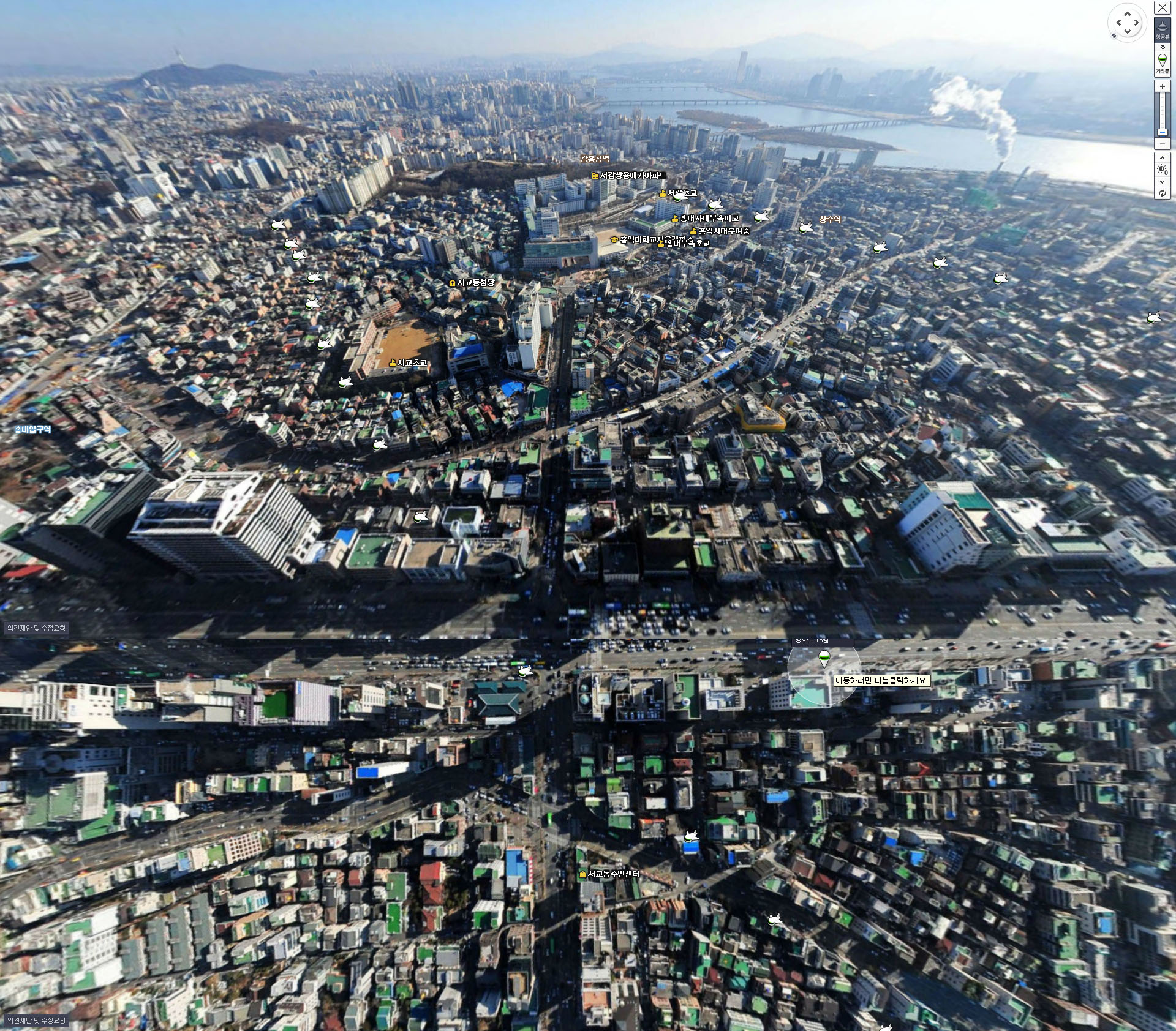
SEOULUTIONS
Bart Reuser is partner of Amsterdam-based NEXT architects. In the book Seoulutions he presents a temporary record of the continuous transformation of the Hongdae district in Seoul, a creative hotspot with a young and diverse population.
While the booklet is a search for the driving forces behind unique urban solutions, it also pays tribute to a dynamic city. Reuser experiences the city from the inside and analyses its organisation, not to mention the ongoing process of change occurring within Hongdae, both on a spatial and programmatic level. Through numerous drawings, photos, local insight and entrepreneurial spirit, he outlines the fascinating lessons that can be learned.
As Reuser describes: “To visit Hongdae is great, but to come back is even better. Only the person who comes back to Hongdae sees the speed in which this district transforms and is witness of the special relation it has with something as intangible as time. That became my fascination. Not the city itself, but the changes it goes through.”
The book is available for sale at the BNA website >> http://www.bna.nl/product/freestyle-02-seoulutions/
More information about SEOULUTIONS>> http://www.nextarchitects.com/en/projects/seoulutions?c=research
AuthorNEXT architects -
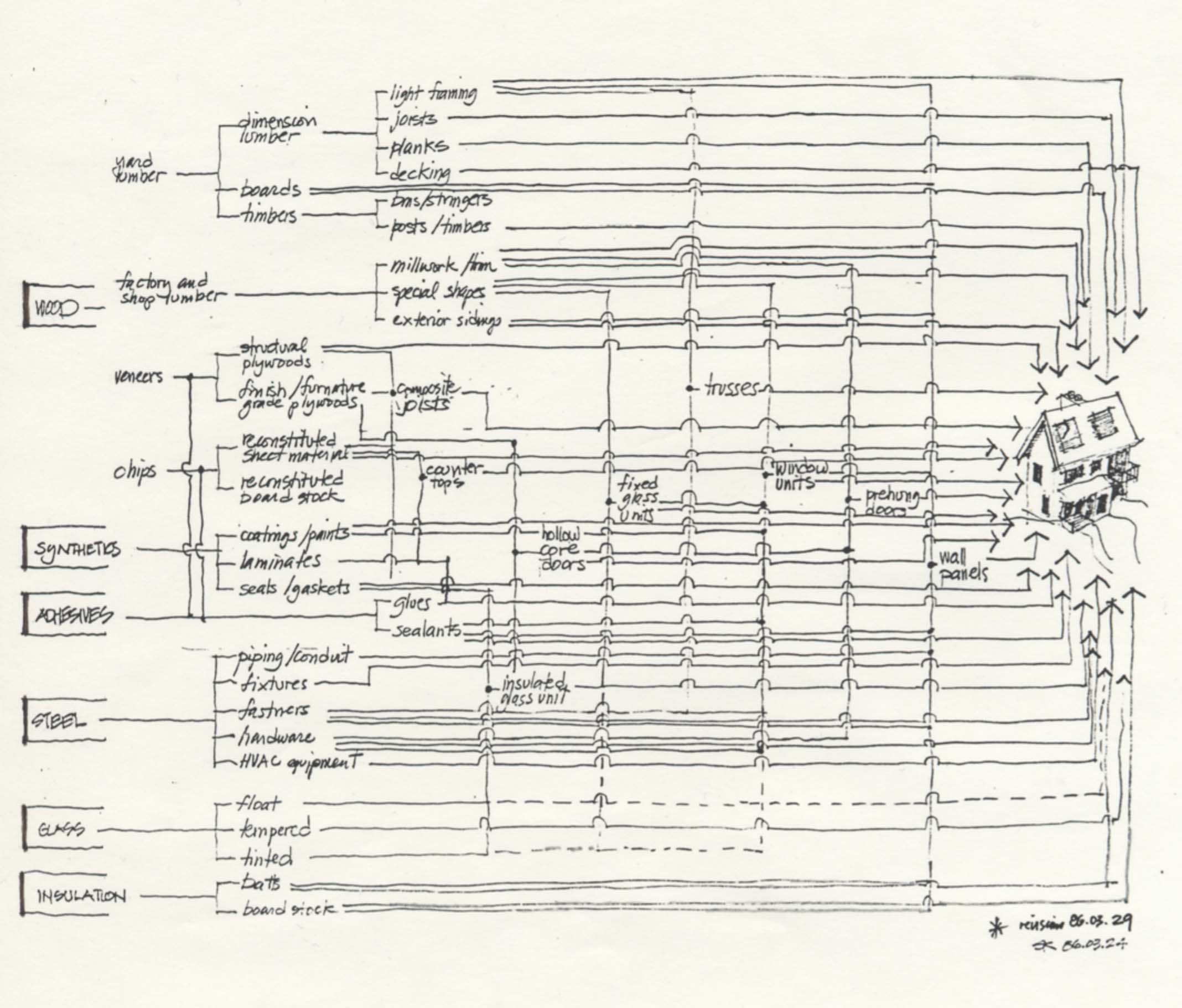
Ecology of Production: Mapping Control in Production Chains
This essay is drawn from my PhD dissertation titled “CONTROL OF PARTS: Parts Making in the Building Industry”, completed as part of my doctoral studies at MIT, 1990