Author: thematicdesign

  • SYDHAVNEN / SLUSEHOLMEN COPENHAGEN, harbour renovation project 2000-2009

    SYDHAVNEN / SLUSEHOLMEN COPENHAGEN, harbour renovation project 2000-2009

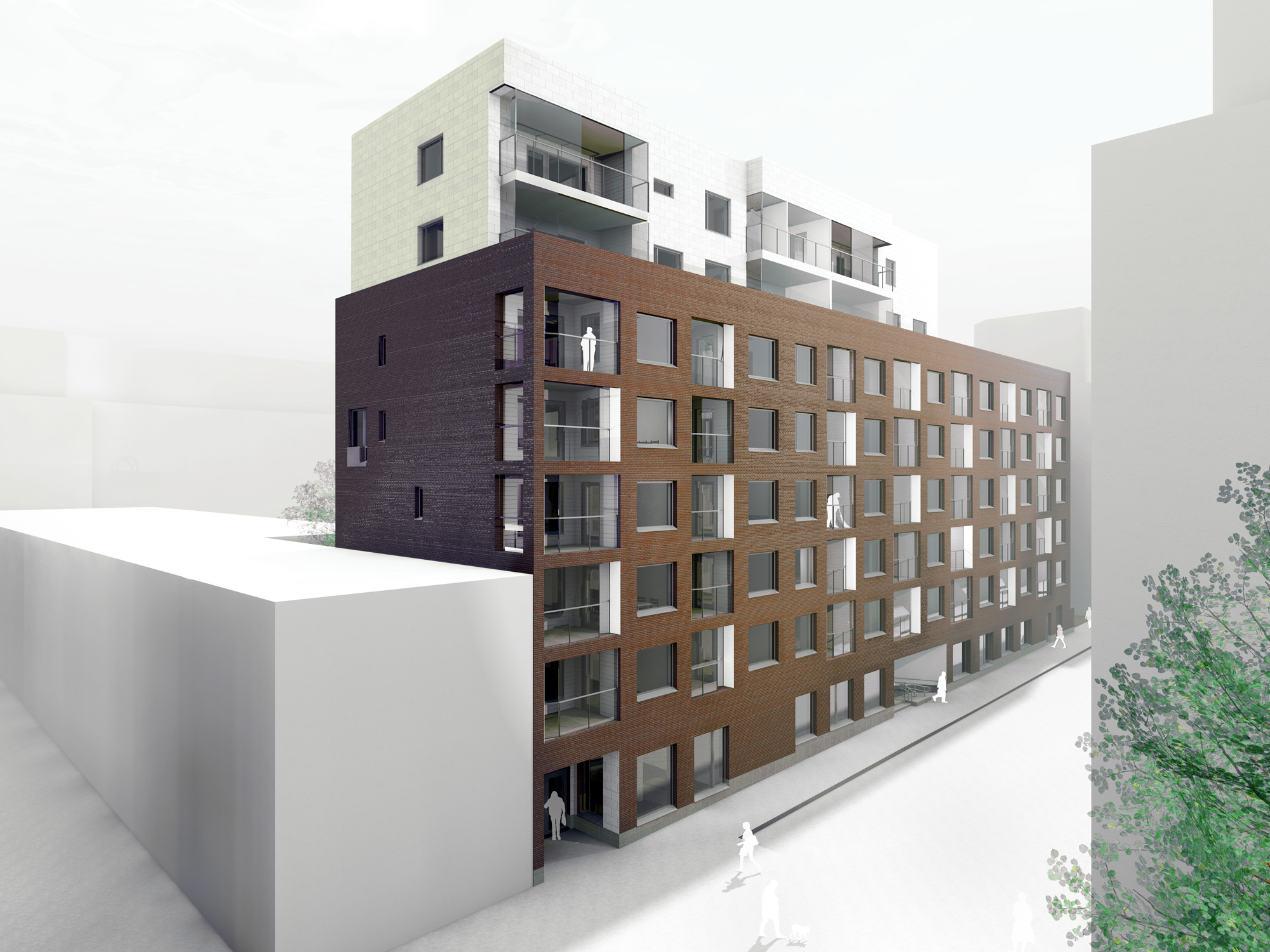
    Sydhavnen is the southern harbour district of Copenhagen, located south of the historic city. With Java Island in Amsterdam as an example, Sjoerd Soeters was asked by the Municipality of Copenhagen to make a plan for the transformation of Sydhavnen into a residential area. This plan consists entirely of city blocks, situated so as to be oriented toward the water on all sides. (more…)

    Author
    Ir. Sjoerd Soeters, pleasant places happy people
  • The Three Stages of Open Building Implementation

    During the past few decades, what is now formally known as open building has progressed through several stages. Initially, Open Building constituted a set of speculative principles and aspirations that led to research, followed by a number of built projects in several countries. In the second stage, open building began to be initiated by clients asking for open buildings – certainly in office and retail markets where this practice has long been conventional and unremarkable – but increasingly in housing and healthcare facilities in a number of countries. In the third stage, open building came to be public policy. During all these stages, research (in academia, government and industry) and teaching has continued on a wide range of open building issues – including design methods, finance, technology, and user engagement.

  • AIKALISÄ Housing for Seniors

    AIKALISÄ Housing for Seniors

    A group of senior citizens formed a housing company and
    applied to the City of Helsinki for the right to rent a site in
    the new Jätkäsaari area. Jätkäsaari is close to the center of
    Helsinki and surrounded by the sea. These kind of initiatives
    are highly welcomed by the city. The senior citizens financed
    the project by themselves since banks refused to give
    mortgage for an unfinished construction of this type. The
    housing company hired a project manager and the design
    team. First they decided on the common spaces – they
    wanted to have more than is usual to apartment buildings.
    The architects designed an adaptable building, where the size
    of some of the units could be altered. For each unit several
    floor plan options were created to act as a starting point for
    individual design. Every household met the architect once or
    twice and their unit was tailored for them. The building costs
    and total costs for the occupants were considerably lower
    than the price of condominiums sold in the area

  • KAIVOMÄKI Housing for the Elderly

    KAIVOMÄKI Housing for the Elderly

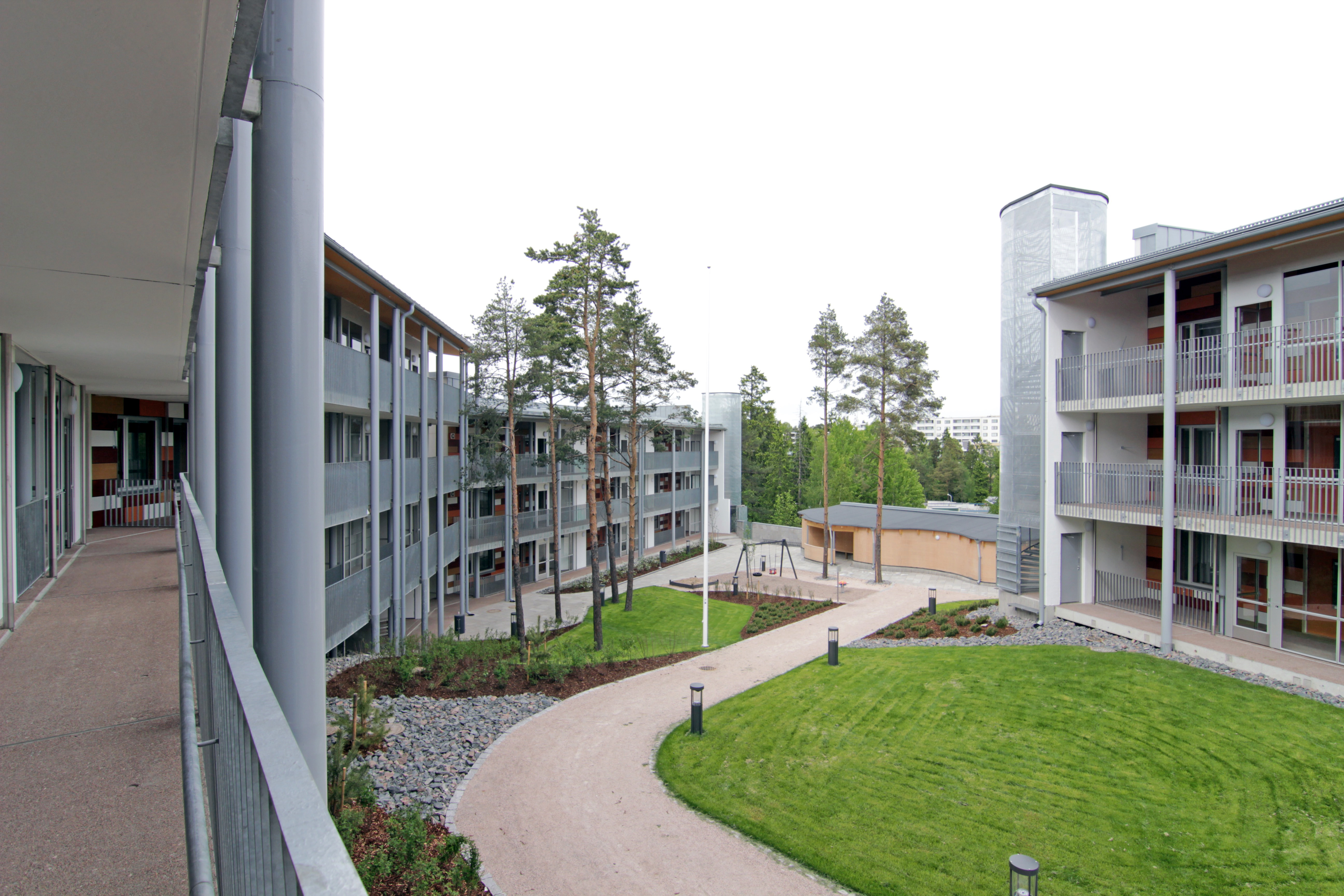
    Kaivomäki is situated in the Leppävaara district of Espoo. It is a combination of
    sheltered elderly housing and independent small rental units for senior citizens.
    In sheltered elderly housing each occupant has a spacious room with bathroom.
    Kitchen, dining and living room are common and personnel are present 24/7. The
    building is adaptable so that each floor can be either elderly housing or independent
    units and changed to the other with renovation. Out of three elderly rooms two
    independent units can be made. The spatial structure allows the change also during
    use, but ventilation systems were not designed for the change. However, during
    design we had to change some floors from one to the other since there was more
    demand for independent units. This kind of combined house is new and brings the
    benefit that the personnel can also offer services for the senior citizens should they
    need them. The project was awarded for the use of color in the facades. (The floor
    plan below is with the independent units).

  • Social Housing HARJANNETIE 13

    Social Housing HARJANNETIE 13

    A social housing project situated on a hilltop in the new Viikinmäki residental
    area in Helsinki, Finland. The access to most of the apartments is via
    semi-private open corridors surrounding a common yard. Each
    dwelling has living spaces on both sides of the building, the kitchen
    connected to the access corridor with a private glazed veranda
    and a patio, the other rooms opening towards the views over
    the landscape, with French balconies. The project was awarded
    an honorary mention by the City of Helsinki Office of Building
    Permits for its innovative concept on a difficult site.

  • Infill Systems: A New Business Opportunity

    Infill Systems: A New Business Opportunity

    Infill Systems are nothing more than well-organized packages of available products, prepared off-site for rapid fit-out in empty spaces in a building.

    They are specified, budgeted and contracted one-dwelling-unit at a time. Their specification can be made by the provider (developer) or by the end-user.

    Infill Systems are effective in repositioning older buildings for residential occupancy, or for quickly and quietly upgrading individual units one-at-a-time in an occupied building.

    Infill Systems are also effective in new construction where speed-to-market is critical: construction of the base building can proceed before decisions are made about number and layout of dwelling units, meaning that decisions about the target market (or custom sales to individual buyers) can be deferred without risk.

  • The Future of open building resides in the existing built environment

    The Future of open building resides in the existing built environment

    Buildings are made for people. In the post-war period of time it was the idea of collective and stable identities of groups of people that dominated our thinking in design. The results were mono-functional and rigid buildings and areas. Nowadays this idea has been left. We realize that we have to deal with an individualized and dynamic demand, due to large demographic changes and to technological developments. This has an enormous impact on the existing built environment. Because this existing stock satisfies more than 99% of existing and new demand for all kinds of housing. Open building is based on this point of view of ever changing individual demand. Therefore the future of open building resides in the renovation and transformation of the existing built environment.

  • DESIGN PLAY FIVE Part 2 by undergraduate students at SIT

    DESIGN PLAY FIVE Part 2 by undergraduate students at SIT

    Almost 80 students who are at the third grade of the Architectural Department enjoyed the Design Play 1 and 5 at the Shibaura Institute of Technology in Tokyo. They first made hand writing in the class spending about 20 minutes followed by the explanation of the constructor, Professor Minami. The illustrations in the book of “Conversations with Forms” and some drawings by the instructor were shown as a guidance. After the class students spend a couple of weeks to explore their studies using the Sketch Up as their home works.  Some students have no experience to use the Sketch Up before so it took some time to start the Plays. Professor Minami told the students there is no right nor wrong answer for the Design Plays and that students can just develop their design skills by enjoying the Plays. You can see the varieties of our students’ works. This is just the beginning of our students’ works.

  • DESIGN PLAY FIVE Part 1 by undergraduate students at SIT

    DESIGN PLAY FIVE Part 1 by undergraduate students at SIT

    Almost 80 students who are at the third grade of the Architectural Department enjoyed the Design Play 1 and 5 at the Shibaura Institute of Technology in Tokyo. They first made hand writing in the class spending about 20 minutes followed by the explanation of the constructor, Professor Minami. The illustrations in the book of “Conversations with Forms” and some drawings by the instructor were shown as a guidance. After the class students spend a couple of weeks to explore their studies using the Sketch Up as their home works.  Some students have no experience to use the Sketch Up before so it took some time to start the Plays. Professor Minami told the students there is no right nor wrong answer for the Design Plays and that students can just develop their design skills by enjoying the Plays. You can see the varieties of our students’ works. This is just the beginning of our students’ works.

  • DESIGN PLAY ONE Part 2 by undergraduate students at SIT

    DESIGN PLAY ONE Part 2 by undergraduate students at SIT

    Almost 80 students who are at the third grade of the Architectural Department enjoyed the Design Play 1 and 5 at the Shibaura Institute of Technology in Tokyo. They first made hand writing in the class spending about 20 minutes followed by the explanation of the constructor, Professor Minami. The illustrations in the book of “Conversations with Forms” and some drawings by the instructor were shown as a guidance. After the class students spend a couple of weeks to explore their studies using the Sketch Up as their home works.  Some students have no experience to use the Sketch Up before so it took some time to start the Plays. Professor Minami told the students there is no right nor wrong answer for the Design Plays and that students can just develop their design skills by enjoying the Plays. You can see the varieties of our students’ works. This is just the beginning of our students’ works.