Author: thematicdesign

  • This Site as Public Forum

    This Site as Public Forum

    This site is intended to facilitate an exchange among those of us who want to cultivate attractive and healthy everyday environments. To be successful we need new knowledge and new skills. These have to do with the issues mentioned in the  home page:  Change over time;  Distribution of design tasks and relations with other designers – those who acted before us, those we share a site with , and those who will act after us;  Sharing values with those who we relate to.

    These issues are not generally discussed, or studied, or taught in schools. The site seeks to serve those who do so nevertheless, and offers a forum for an international exchange.

    (more…)

    Author
    john habraken
  • The Silent Game; an Interactive DesignPLay

    The Silent Game; an Interactive DesignPLay

    In the book titled “Conversations with Form the idea of ‘DesignPlay’ is introduced and seven different examples are given in increasing complexity.  These plays are basically solo plays that you can do to develop your skills in form making. In it, form transformation is considered as the basis for form making.

    (more…)

  • An interactive stacking play

    An interactive stacking play

    In the book “Conversations with Form” designPlay 7 is about the combination of different systems, stacked one upon the other into a coherent whole. For an introduction into the ramifications of this way of combining forms made from different systems and for varied examples of such combinations, see the book as mentioned.

    In most cases the stacking is controlled by a single designer but this kind of systemic combination lends itself for an exciting and challenging designPlay as well.  The attached pdf file introduces this particular interactive play.

  • Element library for the ‘silent game interactive design play’

    Element library for the ‘silent game interactive design play’

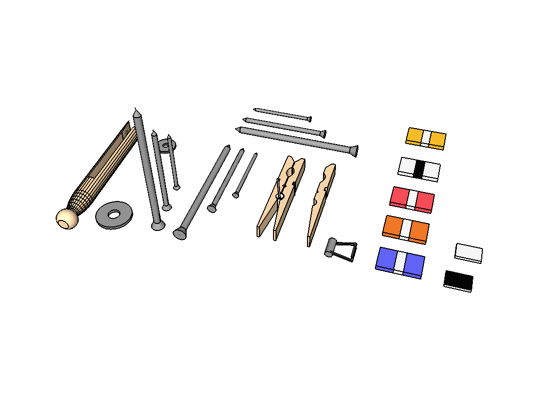
    See post in category ‘plays’ titled “The Silent Game; an interactive DesignPlay” here the entire play is done with nails of different sizes.  These nails were part of a larger collection of pieces like washers and parts of clothespins that are readily available in any hardware store and ready to play with. 

    The library here gives these  parts in SketchUp format.  Playing with the real things is by far the fastest way, but if you want to convey the various stages of a play,  or want to play with a partner who  is elsewhere on the globe, the library here is ready for use. 

    You will also find a few differently coloured slabs that we had made when the game was new. They can be used for an alternative library or be mixed with the hardware parts.

  • baseform for play one, feet/inches

    baseform for play one, feet/inches

    The SketchUp document with  this post gives the base form for Play One, Zones of Transition:  suggested on  page  46 of the book “Conversations with Form, A workbook for Students of architecture”  In this post the dimensions of the base  form are given in feet and inches.

    Under the category ‘base forms’ you will find base forms in SketchUp format in both meters/cm. and feet/inches for all the seven plays in the SWF book as well as for all the plays newly introduced in this site. Click category ‘plays’ for an overview of the  plays available on this site.

  • inhabiting what is there

    inhabiting what is there

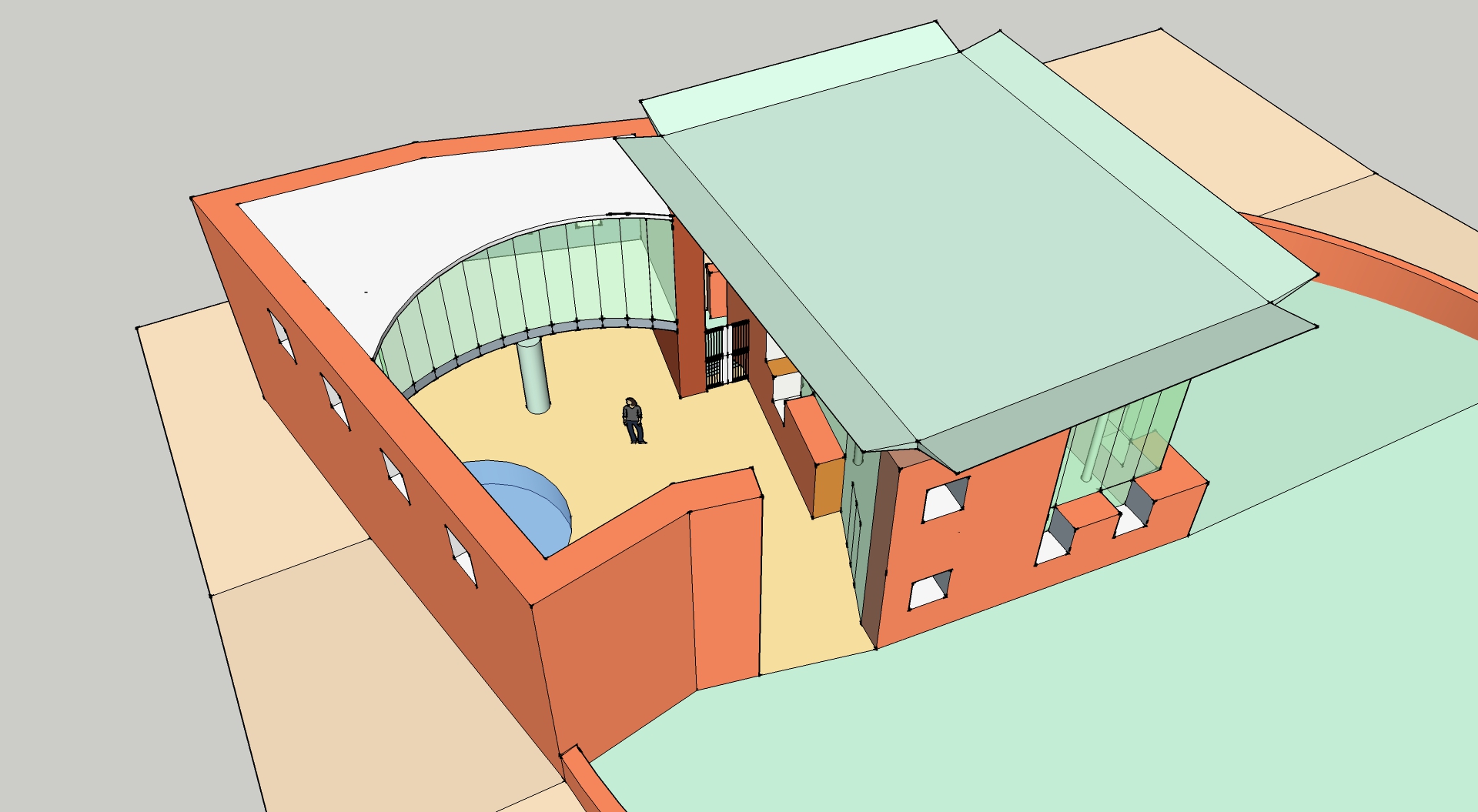
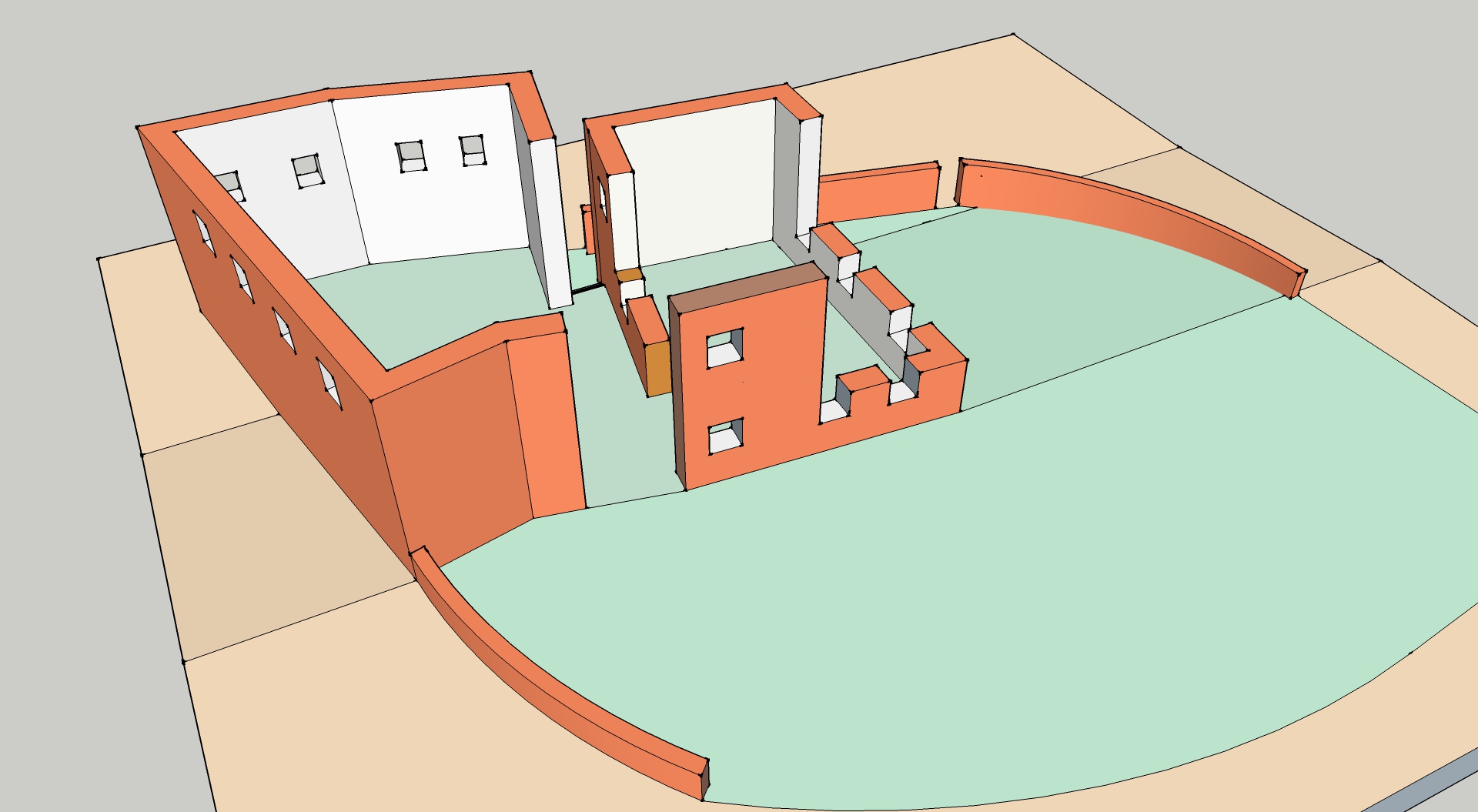
    This post introduces an example Play where the base form is the ruin of an old Portuguese farmhouse and the player is asked not to alter the ruin other than add to it with contemporary materials and components to make a coherent whole. As usuals with DesignPlays no ‘program’ is given but the capacity for possible use should emerge from the form itself. The particular play example shown here touches on the issue of the combination of two or more architectural systems, each under control of a different designer. The challenge is to arrive at a coherent whole, where the handling of each of the systems is doing justice to its characteristic properties. In this case we have an interaction between designers who are separated in time and whereas the last designer must respect and enhance what is left of the earlier design.

    A SketchUp model of the ruin is available under the category ‘baseforms’.

  • a ruin as baseform

    a ruin as baseform

    Casa Alenquer in Portugal (2001) was designed by architect Aires Mateus. It is situated in the ruin of a ancient stone farmhouse, of which only walls were left, in such a way that it occupies the space between the walls, but in such a way that the new structure never touches the old one.  In the book “Conversations with Form” play 7 is about combining two very different systems into a coherent whole. the casa Alenquer shows a special way of doing so. (page 224-225)

    Using a ruin as a baseform to be preserved in a new project is an interesting kind of play to do: (more…)

  • contributing practitioners and educators

    contributing practitioners and educators

    The attached pdf document gives a short biography of the Architects, Urban Designers, Educators and other professionals who have contributed posts to this site.

  • Systems Separation: An Approach to Architectural Management

    Systems Separation: An Approach to Architectural Management

    The Canton Bern (Switzerland) Office of Properties and Buildings has adopted a radically new approach to the acquisition of public facilities. Having been used in the design and delivery of more than twenty projects (healthcare, university academic buildings, prisons, residential living, etc.) the approach makes a distinct separation between the long-lasting part of each building (called the Primary System) from the more changeable parts (Secondary and Tertiary Systems). The first example was a very large hospital on the campus of the Inselspital Hospital in Bern – the INO. This is a report on that project. At the end of the report, information is provided on how readers can acquire a comprehensive report / evaluation of the projects, hosted by the client and attended by experts from several countries.

  • KIT-FIT: Engaging Students in a study of a new infill system approach

    KIT-FIT: Engaging Students in a study of a new infill system approach

    The birth of a residential FIT-OUT industry is just a matter of time. This new kind of industry will do its work INSIDE buildings—fitting them out for dwelling units, live-work spaces, or whatever the project allows in terms of possible mixed uses. This will be a specialized industry with companies that develop their place in the local culture and economic habits.